Showing posts with label Urban. Show all posts

Wednesday, November 15, 2017

clumsy

I was just going through and clearing my emails in my Admin / IT sub-folder and just came across this... and remembered the chilly and chilled Toronto evening when we shared a plate each of tuna, chicken and aubergine (sorry, eggplant) and sipped on Filipino hot toddies. 

On a day when days have somehow lost their sense and sequence; my mental calendar would tell me that was only 10 days, and about 30C degrees and a 8-hour time difference ago. Where the landscape is awash with sandy yellow submerging with clumsily and hastily made steel and glass of Kuwaiti skyscrapers whereas they would have been much better off keeping to their local tradition and scale, at which they are very good at, I'm reminded of a suburban landscape, colours of which neutralised by the cold, dry air. Only 48 hours after flirting with the feeling with I could just live there with a few very dear people to me (no matter how much and how far back I've known them), would I arrive in New York -- no longer than 48 hours in that magestic city, and it would immediately feel my natural home. And then Kuwait, the Middle East, the sand, the inefficiency, lack of transparency, covered all over in white and oil-dripped sand; another home of the sorts...?

And then I go back to this email... and I miss Toronto, and the dinner, and the walk... not so much the sore throat but the sweet goodbye.

Thursday, October 05, 2017

pride in our parks

I received a message on LinkedIn asking me whether I wanted to share a regeneration project I was involved in to be promoted by some online publication. The request didn't appear anything much more than an attempt to aggregate some success stories for a self-proclaimed publisher and their blog/book/magnum opus.

Nonetheless, I tried to come up with something worthy of a mention and moments before I would receive a notification on my Twitter feed of a retweet by RioOnWatch, I reminisced of an emotional moment just about 4 years ago these days from Rio de Janeiro.

At the time, I was in charge of coordinating and running the floor for the Urban Age 2013 Conference -- as Rio was gearing up for the 2014 World Cup and the 2016 Olympics, we were investigating major investments (mainly in transport and regeneration) and whether they related to / tried to alleviate some of the chronic problems facing the city. We wanted to highlight Parque Madureira as one that gifted the city with a public asset in a once redundant / obsolete part of the city.

The architects in charge of the project presented the project at the conference. While prepping for the actual conference, testing A/V and lighting, we've run each presentation to the desired setup and presentation sequence. One of the technicians in charge for the technical desk first erupted to shouts, laughters and excitement which were then slowly left to a mix of emotions and tears. He later told me he grew up in the area of regeneration, and was now using the park and very proud of it being showcased as a prime example of regeneration at the Conference.

This, for us, was a testimony of a story of success and one that probably merits a narrative and a reminder at times when there's little appetite or faith left in mass regeneration. At a time when I've been desperately searching for some inspiration, how I recall the joy and pride in that man's eyes...


Monday, July 18, 2016

When J. pulled me aside, my phone had been dead for just short of two hours. When he reluctantly asked if I knew what was going on, he probably did not genuinely think I did not. Despite our age difference and having only seen each other a few times in our lives, I trusted he knew me well enough to recognise a man in me whose ears were often on the ground. He might have also sensed that I am someone who emotionally connects to those, who may be thousands of miles away.
That reluctance, helped by A.’s initial support would do just about enough to keep my nerves in check. Now I knew for a fact that the sickly feeling I had been having in the past hour was telepathically linked to what was going on back home. J. looked worried, though. For a man who made the bold decision with his wife to take their family to a 10-day long trip across the country on the day its main airport had seen the worst terror attack in its history; for a man whose country has seen no fewer problems than mine, his eyes laid bare the truth. Things looked to be seriously getting out of control.
I rushed downstairs to make a few phone calls. Had Z. found a safe haven? Mom and Sister should have been alright, far from the centre of it all, but how did they feel? Where was Dad? They must have been trying to reach me… People around me started to ask how I felt, a question I thought I’ve heard all too often lately, in between Brexit and all sort of troubles in Turkey. Somehow, I was unable to give a concise answer, the painful indifference I wanted to resort to, I too often have in the recent past, was nowhere to be found. Lack of a clear answer to the simple question of ‘what is going on?’ was weighing too heavily. After all, this wasn’t one of those events with grave consequences on my life in which I had no say, or those where the privileged status of mine and those around me would keep us ‘statistically’ safe. This was a moment of great uncertainty, and was already traumatising those I most cared about.
As the sense of urgency started to give way to confusion and disgust, I tried to collect myself, and decided to follow A.’s advice, not to spend the rest of the night on my own. The inevitable death to my phone’s battery in a few hours’ time would also mean an unavoidable distancing from constant flow of information. It didn’t mean emotional detachment, but gave enough breathing space to avoid suffocation through the thick and humid air of Venice.
Wherever I went over the weekend, I was greeted with the natural, inevitable question – trying to make sense of the events with the little information at hand and communication I could keep with those back home. There has recently been a running gag with friends back home: how the UK politics, for once, has stolen the scene from the Turkish political landscape. While I heavily continued to comment on mainstream British politics recently, I felt at such unease to even come up with meaningful deliberations of thoughts and feelings in this latest saga. It was not all that different from June 2013 – where I would find my hands tied, fully submerged in front of my office computer in London on a Friday evening, watching developments unfold thousands of miles away. My boss R. would sympathise and let me take the earliest possible flight so I could be with those who I loved – the same R., who on Friday night put his head against mine and consoled me. No trip was to be had, though, all access was removed.
Over the years, I’ve reluctantly learned to tame my emotions towards incidents that are out of my immediate control or reach – at least to such an extent that I surprise myself as remaining one of the calmer people in a group of acquaintances when a major incident takes place. Combined with our day’s horrific sense of the normalisation of the evil, this has helped me distance myself from the immediate feelings of devastation and threat… an involuntary and compromised resilience of some sort. I am also trying to take the optimistic view on things in life, often conflicting with my true feelings and often with the risk of appearing naïve or ill-conceived [legitimising the evil] by those whose opinions I care about.
One of the greatest travesties of our times is our indifference to the nuances of mass sufferings around us. There are too many of them and adjusting our moral compasses to build a hierarchy amongst them has not helped either. The mainstream media has a lot of blame to take here. And what little of the nuances mainstream foreign media covered over the weekend has been short-handed, if not ill-conceived. It was almost a return to the early days of Erdogan’s ascendancy to power – the simple narration of dichotomy had prevailed.
And it is then, I finally started to reflect on the numerous conference sessions and exhibitions I experienced in the last few days and search for a meaning behind the events over the weekend and how to position one for the future. Forensic Architecture’s work at the 2016 Venice Architecture Biennale (http://www.forensic-architecture.org/…/reporting-front-ven…/) is one of those few pieces that respond directly, and with strong relevance to its title and its brief – Reporting From the Front. Visually constructing the scenes of drone strikes at victims’ households by weaving forensic data into a re-rendering of architectural details communicated through various forms of narrative, the exhibition shakes your indifference and detachment from all forms of physical and geographical sense of being and puts you right into the thick of it. Three case studies follow the scales of Afghan families’ kitchens to Gaza residents’ streets and the vast Mediterranean that migrants so desperately try to cross. To those who pay even the minimum of attentions, there is no catastrophe deprived of our senses.
Perhaps the inability to 'report from the front' as I often do, was what was getting to me. And perhaps, unlike Gezi Park, but in light of all these sensations, I was internalising and was internalised in the events that unfolded over the weekend – distancing was ever more difficult but somehow the rupture felt ever more real. So much so that my often-found optimism left its way to confusion and a form of mutism. As the aftermath started to unfold through Saturday and Sunday, it was more apparent that the necessity to own the narrative of inclusion, togetherness, and resistance to oppression and the tyranny of the majority is urgent. For everything we would wish to turn a blind eye, we shall be reminded of our collective duties. And for every moment we lose hope, we need to keep investigating, forensically, to find and pave our path to recovery.


Saturday, July 02, 2016

2 July 2016 Remain March


Few images from today's march; and some thoughts on it:
I can't remember the exact number but it is probably already over double-digits, the number of marches and protests I have attended in London. This is one of those that I wanted to take part in, but found it a little difficult to associate myself completely, for a number of reasons.
First of all, it would have benefited everyone if this were held before the Referendum, not after. As in this case, as a protest march, not only were its effects very limited; had it been held before, it could have helped expose the bitter lies of the Leave campaign before voting took place. Whether that would attract attention and swing votes, we'll never be able to know.
The march started at Park Lane and ended at Parliament Square, a very familiar route for anyone who's attended one of these. Last year, following an unprecedented surge and devastating loss of lives at the seas of migrants hoping to flee hardships in their countries, we marched on 12 September 2015, in solidarity with them. Sadly, it had very little effect on government policy: Prime Minister Cameron had announced UK would help a mere 20,000 refugee seekers until 2020. The Home Secretary Theresa May is now hoping to replace David Cameron as the Tory leader and future PM.
Ironically, that march took place on the day Jeremy Corbyn was announced as the new leader of the Labour Party, trying to heal wounds caused by a slightly unexpected defeat at the general elections earlier in May. The newly elected leader, and a beacon of hope for the progressive sects of Labour supporters (and others), addressed that rally
I felt similar vibes along the march today: there was definitely more of a 'feel good' atmosphere than one would expect. It was more of a celebration of London's multiculturalism and diversity, as a reminder of its richness that, as the argument has long taken hold, is under threat with Brexit. As BBC has put it, "... [t]here is barely an organiser in sight and what police presence there is is very low-key - but this outpouring of feeling is also quintessentially British: Calm, polite and orderly."
I find this optimistic attempt naive and problematic. It is detracting from the root of the problem and runs the risk of creating a false sense of solidarity at a time of great uncertainty. There are battles to be fought, and it requires energy, long-term strategy and resilience.
More problematic is the view that many Leave voters will take, with this march: at worst they will see it as divisive, both in terms of its narrative and its geography; they will certainly feel as if their vote is being dishonoured; and at best, as a naive attempt with no result whatsoever.
The march and some of the slogans / banners, along with the debate in the past week or so expose some great democratic deficiencies in the United Kingdom: many now wish the Parliament to resolve the Brexit issue over a vote. My initial reaction to this is simple and straightforward: it was the Parliament who voted to take Britain to war in Iraq.
That those who are not happy with a public opinion in the form of a Referendum would wish to use liberty to change the rules of the game can be damaging in the long run, as it creates institutional discrepancies. I will not go into another debate on the extremely significant methodological deficiencies of a Referendum and its validity here, as I have done that earlier.
But, it helps to remember some of multiple issues with the system we have here: from lack of proportional representation, which was challenged and quashed by a vote on Alternative Vote Referendum in 2011, to the deeply entrenched and male-dominated power politics within the mainstream Labour and Conservative Parties in Westminster. What we have been witnessing at the Parliamentary Party level debates in both since the Referendum results is testimony to that.
What this march, both at a personal and a general level, helped uncover, once more: how people organise through social media to gather in thousands within a week and demand their right to protest and receive the necessary support to use the city infrastructure to hold it.
This, viewed in light of how such demands are handled in Turkey, despite spending almost a decade here, still amuses and inspires me. In Turkey, such events often end with tear gas and water cannons... and speaking of water cannons, by the way.
The march once more exposed the toxic, disgusting lies the Leave campaign threw at the British public, and as much as it inspires me to continue helping this exposure, it further breaks my heart to see how a large part of the Leave voters believed in them, wholeheartedly. At a personal level, I have been trying to expose these and will try to continue doing so.
Finally, as I was gathering my thoughts on today and in general, lying down on the grass in Hyde Park, I was overhearing dozens of conversations around me, in almost as many languages. A moment of thought of London losing this very character that makes it so special weighed heavily on me.

Monday, April 25, 2016

Collecting evidence on Old Street cycle-lane and cycle-spaces


Many of you may have seen the roadworks around Shoreditch that lasted a good few months. A lot of enhancements have been made to separate bicycle traffic and stopping positions (around traffic lights) from motor vehicles and pedestrians who extensively use the crossing at Old Street and Great Eastern Street junctions. I pass by the area almost daily, either to commute to work or recreationally as I live nearby. A lof of time and money have bern invested, and the outcome, notwithstanding some design problems (i.e. moving pedestrian crossing further north of the bike crossing is confusing, although understandable given the cycling route via Pitfield Street), is quite successful.
You've also seen me sharing articles and personal thoughts on negotiation of right of way and traffic duties between various road users and perceptions different types of users have on one another. My general thoughts can be summarised as: "a lot of cyclists put a bad name into cycling through careless and selfish rule breaking while many (but a minority of) motor users, primarily motorcyclists, black cabs and white vans are outright disrespectful.
I was just cycling from Bethnal Green to Holborn and saw a black cab pull into the newly painted bicycle box on the left hand lane, slightly further up than the demarcation line on the right hand line to allow cyclists a crucial head start in conjunction with the all new bicycle traffic green light that goes few seconds before cars, a phenomenon new to London but one I was already used to from my times in Denmark and Germany a whole decade ago (thanks for slowly catching up London!) at what is a very busy road junction.
I waved at the driver and signalled he should be waiting at the line before the box. I know from previous experiences and common sende that it is not required of them to do so if they got stuck there whilst on the move from a previous green light. I've also sadly come to accpet deivers turning left do not need to wait for a bicycle on their rear mirror while this was a major offence on Danish traffic and having been on both ends of the stick (a cyclist and a car-driving pizza delivery boy) in Dennark, I saw how important it was... only to see it as a fantasy here. Anyhow, deliberate trespass of bicycle boxes is a serious offence which motorcylists commit all the time and get away with. This black cabbie should have known better.
And knew he did -- his blunt response to me was: "well I'm suprised you didn't contravene like all your mates do!" My calculated response for which I only had a few seconds to devise was to advise him to not be prejudiced and that two wrongs don't make a right. To which, he responded by saying "it's not prejudice, if majority of cyclists do not follow the Highway Code".
The articles and thoughts I'd shared before all signal at the same direction: road users do not trust one another, and both pedestrians and motorised users have less of a favourable opinion about cyclists. Even would-be cyclists suffer from this as they feel the roads are too dangerous, perhaps not necessarily implying potentially hostile behaviour against them but clearly observing the chaos with which the London roads operate. A lot of this bad name has been bestowed upon cyclists by their own attitudes, and this is not limited to contravening red light and annoying both drivers and pedestrians but also disrespecting zebra crossings and just foul attitude towards cyclists altogether.
I was surprised to see, how in Berlin, cyclists take liberty in facilitating pavements and disobey traffic lights -- an argument often put forth by anti-red-light coalition of cyclists in London as 'those rules are made for drivers and cyclists are incentivised to take shortcuts or streamline traffic'. Well, the truth could not be further from it, and for a number of reasons, including but not limited to: the very different cultures of negotiation between road users in the UK and in Germany; the very different road infrastructures (compare London's mainly narrow streets and pavements to Berlin's wide avenues and pavements) and the sheer population density and moving patterns. Despite my limited knowledge of the discussions taking place in Germany, I think they need to debate their negotiations, too, as once I started cycling regularly in Berlin in 2013, having had lived and cycled in London for over 6 years, I found it confusing and challenging.
But that aside, the divide widens and the problem aggravates in a city like London where cycling numbers are going up and the infrastructure is barely keeping apace. In the hierarchical order of risk to road users, it is natural that the cab driver's behaviour and excuse is beyond proportionality. Yet, the responsibility is shared. The reality is his views won't change overnight by simply getting asked by cyclists to respect the demarcation lines. My intervention seemed to help, though, as he stood right before the bicycle box at the next traffic lights where I gave him a thumbs up. It certainly did not help to see careless cyclists crossing red light (one very fast and at a time when pedestrian lights turned green) on the other side of the road, though. The cabbie might have even asked himself why I wasn't picking on and shouting across the road to the other cyclists.
Although the repercussions will vary significantly, the multi-layered responses should be clear and work in parallel: (unfortunately, and as I hate to advocate this) implementation of law should be stricter; all road users should be much better informed and this could easily be facilitated by signage campaigns at traffic lights (just as is being done on buses and other vehicles); road infrastructure should certainly be upgraded faster; and regressive policies, against which I loudly advocated, such as Boris Johnson's move to allow motorcyclists use bus lanes should be reversed as it settled in a culture of motorcyclists continuously growing an unchecked level of self-confidence in breaking the rules.
To put it in the shortest and bluntest way possible: we all have to be a lot less selfish and a lot more selfless.

Thursday, March 17, 2016

lucid disguise


Of all the possible juxtapositions in this part of #eastend this has always intrigued me the greatest: 

In the foreground is Carter House of Holland Estate by East End Homes in #spitalfields, a typical 1930s social housing estate, home to a large Bangladeshi community who has made large parts of#bricklane what it is today (on that note: brick lane has been a street of constant transformation over the past century and a half, something that's got frequently missed out on the anarchists vs. cereal-maker gentrifiers debate last year). In the background is the Nido Building functioning primarily as a private student accommodation unit. In any other context, a building whose architectural style I find more appealing than other people may, its cladding and dominant blue hue convey to me a false interpretation openness and transparency.

Both estates/buildings are located within the borough of Tower Hamlets, where its edge with the City of London is defined by Middlesex Street, right beside, to the west of Nido Building. The borough council's revenues from Nido's development may even have helped preserve and maintain Holland Estate to date, although we know there is an imminent threat of destruction to pave way for a new development. 

This is a site that sits right in between recently developed, tourist-attracting Spitalfields, developing and startup/incubation promoting, Norton Folgate, rapidly changing, looks-more-like-Manhattan neighbourhood of Aldgate and of course, the behemoth that is the City of London. All of these areas historically, as well as economically established and diverse, naturally prone to phases of structural transformation. #cutlerstreet #clothierstreet existing and transformed (Discount Suit Company) textile and fashion stores are all reminiscent of the huge legacy of this particular site of East End. No wonder why, of course, the pedestrian footfall on #brunestreet where this photo is taken is almost zero while city workers, students, walking tours, lunch breakers flock to arteries and avenues nearby.

Yet in the middle of this mish-mash, what stands out for me is how Nido Building's almost curtain/wall-like shape cuts Holland Estate from the rest of its surroundings in a way no other block of buildings are so visually overshadowed by other City towers that are architecturally so much more forthcoming and eye-catching, such as the Gherkin or Heron Tower just further south. You could argue that this wall protects Holland Estate in a symbolism representative of urban walls we know of our recent past, be it the Berlin Wall, Iron Curtain or the Western Wall. And for that reason, like all other walls before and after it, to me it represents a threat and a cursing in not so much disguise...

Thursday, April 30, 2015

Lest the Ground Forgets

Commissioned by and published on the ArteEast Magazine's ArteEast Quarterly Spring 2015 issue. With gratitude to Ipek Ulusoy Akgul and Raja'a Khalid. The original piece can be read here.


When the Prince of Wales made an intervention to ask the authorities in the UAE, it was about saving a cultural and historical asset that was of national significance to the Emirati on a land that belonged to them[i]. Twenty-one years later a similar request was made by the Prince, to the Qatari wealth-owners on a land they owned for a major development scheme. This time, though, that piece of land happened to be in the heart of London, which is today itself trying to cope with a similar urban challenge of its own: defining a patchwork of a city with its ever-expanding catalogue of high-rise towers and ultra-modern developments – many of which are now financed by investments from the same region that it has, in the past, acted as a protectorate to.
The relationships between the British and those in the wider geography of the Gulf are deep and long-lived. As Britain increased its influence in the Middle East from the 19th century onwards, it has forged a 150-year old history in the Omani Gulf – their ever-increasing paternalistic assumption of a protectorate role reached a peak with the discovery of oil in Abu Dhabi in the late 1950s. This model of indirect control through ‘local collaborators’ can be said to exist today, in even more complex form where some of the roles are now reversed. That the UAE is now proudly showcasing a collection of recent landmarks, finds no barrier to warrant a title reflective of a very popular contemporary theme on urban landscapes: memory andidentity[ii].
As the same British engineers who worked for the development of the Shuwaikh Port in Kuwait surveyed the Dubai creek for dredging and widening to expand the infrastructure to serve a larger metropolis, loans were granted by the Kuwaiti and Qatari ruling families through the intermediary of the British Bank of the Middle East (formerly British Imperial Bank of Iran). The British Bank of the Middle East then provided services beyond that of a commercial bank and helped cement the emergence of modern Dubai. The flexible master-plan prepared by British architect/planner John Harris provided the framework for future development, as Dubai set up its own national bank in the late 1960s. Dubai’s own oil exports began in 1969 and led to the rapid expansion of the city from its initial layout, which consisted of three neighborhoods, Deira, Al Shindagah and Bur Dubai, around the Creek, a formation established long before the arrival of the British, owing to the city’s history of pearl diving and trade[iii].
When the rulers decided they no longer needed to keep some of the earlier settlements, al Bastakiya[iv] was amongst those slated for demolition in the 1980s, in order to open up space for a new skyscraper complex. In came the Prince of Wales, to pledge a convincing appeal to his hosts to keep al Bastakiya intact. At the time, Prince Charles was widely known for his favorable attitude to conservation and a severe dislike of the increasing “vertical, straight, unbending, only at right angles – and functional” architecture in London[v], a staunch position he maintains till today. Chief amongst his most recent victims has been architect Richard Rogers whose schemes for Paternoster Square and Royal Opera House projects were famously slashed by the Prince’s intervention[vi].
As seen with the case of al Bastakiya, Prince Charles’ ideas on architecture have always reached a zone of influence far beyond the boundaries of the British Isles, not just in geography but monetarily too. The latest row caused by the Prince has been over the Chelsea Barracks redevelopment in Westminster. When British newspapers reported in 2009, that the Prince had written to the Qatari Diar to pull back its support from Rogers’ scheme; the whole episode let to a lawsuit for damages of up to £81 million to property developers[vii].
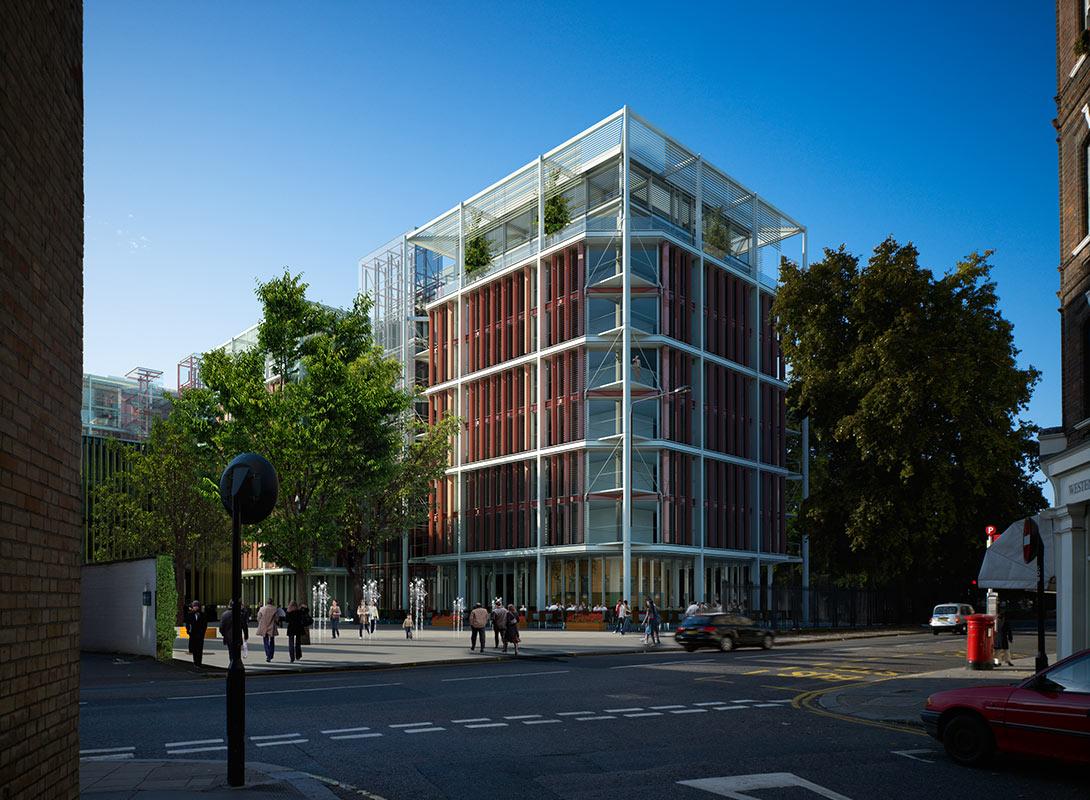
OmerImage_1
Renderings from the Richard Rogers’ proposed. Withdrawn after a special request by Prince Charles to the Qatari Diar.
Credit: 
Chelsea Barracks, Rogers Stirk Harbour + Partners

OmerImage_2
Squire & Partners’ approved scheme, on the way to realization.
Credit:
 http://www.primeresi.com

However, despite the Chelsea Barracks fiasco, it is surprising to see just how much of London’s architectural portfolio is affected by Gulf investment. The Shard, the tallest building in the European Union is the jewel in the crown of a wide London real-estate portfolio enjoyed by the same Qatari Diar, which includes, among others, the town’s infamous shopping center, some of its most expensive residential units, a portion of its stock exchange, the American Embassy, and a major investment, the East Village, around the site of the London 2012 Olympics[viii]. Funnily enough, the Shard was one particular architectural centerpiece for which the then Deputy Prime Minister issued a planning consent despite heavy opposition from heritage bodies.
Qatar’s neighbors just across the bay, too, have aggressively been investing to get valuable pieces of the city, and although they have recently failed to buy the signature financial district of Canary Wharf in London[ix], the Mayor of London goes to work every day on land developed by financial resources from Kuwait. In 2012, Saudi Arabia invested £60 billion into the UK, while Abu Dhabi’s royal family have become the largest landowners in Mayfair (after the Duke of Westminster) following their own continuous investments since 2006 now valued at of £5 billion[x],[xi]. Some of these projects are naturally faced with much inspection for example, a deal struck with the Bahraini Government in 2013 to help build a new community on a 500-hectare land in the south of the country received much scrutiny from the British public with respect to the latter’s way of dealing with democracy protests during the “Arab Spring”[xii].
Gulf countries are, of course, not alone in investing in one of the most liquid real-estate markets, as their share of investments is on par with those from the Chinese, and also the Norwegians through their government-backed pension fund, one of the world’s largest sovereign wealth funds [xiii]. Owing partly to the less hospitable atmosphere in the United States following the 9/11 attacks, as well as the deep-rooted ties between the Gulf and the UK, the latter has found a source of bullion. It is with relish that the Mayor of London accentuates the city’s status as the unchallenged holder of the “unofficial title as the ‘eighth emirate’”[xiv].
Propelled by this resurgence in its upmarket real-estate, this “eighth emirate” has been forced to make a decision on what type of preservation it should turn its back on: the much-loved landscape or the early-20th century planning ideal that has come to protect much of what still makes Great Britain a mixed land of post-industry and greenery. “Growing up” or “growing out” have been the two alternatives, and the former has been the favored option with demand for high-rises increasing on an annual bases[xv].
Known largely for investing in the trendier areas of Mayfair where Gulf buyers are estimated to be making 10 per cent of all purchases, money has started to pour across the city with an eye to reap the highest benefits from its recovering housing market[xvi]. However, not all of this skywards growth is associated with creation of new human environments. The increasing number of “ghost blocks” has been an outspoken phenomenon[xvii] and with acute housing crisis becoming one of the key talking points for the upcoming general elections in May, there emerges a discrepancy between these new towers of steel and glass and the land upon which they sit.
While this special relationship between London and the Gulf continues to receive a helping hand from the Mayor with his occasional trips to the latter region, there seems to be very limited space left for the Prince who would much rather these skylines be built elsewhere: “It would be a tragedy if the character and skyline of our capital city were to be further ruined and St Paul’s dwarfed by yet another giant glass stump, better suited to downtown Chicago than the City of London”[xviii].
London’s newly found excitement[xix] in ushering foreign investment is counterweighed against its attempts of creating “new old neighborhoods” as part of a legacy plan that sits within a much larger framework of its urban desires[xx]. This sentiment repeats itself in the Gulf, which also grapples with contemporary and contrasting views on urbanism. As new developments in the Gulf continue to mimic Los Angeles or Las Vegas[xxi] more than the Londinium of the Romans, it is difficult to fully explain the rich legacy from which one should expect to draw a different diagram of what “Middle Eastern / Arab / Islamic urbanism” may be. If Richard Rogers is one of today’s most established architects in the UK, Sir Norman Foster’s name will be even more familiar to those in Kuwait and the United Arab Emirates; his firm’s work includes the National Bank and the International Airport in the former and the Index Building in the latter. An ideologue by his own definitions, his vision for the future may have been a motivation for his selection by the people behind the Masdar City development in Abu Dhabi.
Masdar City, to which the Prince of Wales was once made a patron, is principled on the buzzword of current urban times: “sustainability”. It would be a major mistake to single out Masdar as an outlier in the long Middle Eastern tradition of sustainable architecture and urbanism. The project’s ambitions to create a zero-carbon city with its reduced need for energy and water borrows from a long tradition of effective architectural principles developed around these geographies. The city’s tight and dense grid is a direct response to the Islamic urban principle of narrow streets allowing penetration of light and circulation of air, many examples of which can be found not only in the winding streets of Andalucia in southern Spain but in the historic neighborhoods such as al Bastakiya in Dubai[xxii] — whose famous wind towers motivated the Prince’s calls for preservation, have been interpreted with a modern twist at one of the few buildings, namely the Masdar Institute of Science and Technology, that have been realized in what otherwise has been an ill-fated project due to the 2008 financial squeeze[xxiii].
The question regarding the quality of the urban environments in which we live has, intrinsically, as much to do with the aesthetic principles with which they are built, as it has with what sort of human environments they create and who calls the shots (and how) on who will be experiencing these environments, if anyone at all. Just as the Harris master-plan provided a backbone to what was to follow, the opposite forces now leave significant marks on the capital of the once-protectorate. It may help to let go of foregone titles, in favor of a more consistent dialogue, both within and with one another.


[i] Sultan Sooud Al-Qassemi, “Breathing Life into Bastakiya and the History of Dubai,” The World Post, Huffington Post, August 5, 2010. http://www.huffingtonpost.com/sultan-sooud-alqassemi/breathing-life-into-basta_b_488900.html (last accessed March 30, 2015).
[ii] “Lest We Forget: Structures of Memory in the UAE,” National Pavilion UAE, Venice Architecture Biennale. http://nationalpavilionuae.org/architecture/2014-2/ (last accessed March 30, 2015).
[iii] Stephen J. Ramos, “The Blueprint: A History of Dubai’s Spatial Development Through Oil Discovery,” Belfer Center for Science and International Affairs, June 2009.http://belfercenter.ksg.harvard.edu/files/Ramos_-_Working_Paper_-_FINAL.pdf (last accessed March 30, 2015).
[iv] Now renamed Al Fahidi Historic District.
[v] “A speech by HRH The Prince of Wales at the 150th anniversary of the Royal Institute of British Architects (RIBA), Royal Gala Evening at Hampton Court Palace,” May 30, 1984.http://www.princeofwales.gov.uk/media/speeches/speech-hrh-the-prince-of-wales-the-150th-anniversary-of-the-royal-institute-of (last accessed March 30, 2015).
[vi] Robert Booth, “Richard Rogers: ‘Prince Charles wrecked my Chelsea project’,” June 16, 2009.http://www.theguardian.com/uk/2009/jun/16/richard-rogers-prince-charles-architecture (last accessed March 30, 2015).
[vii] Sarah Bell, “Prince Charles’s role in battle of Chelsea Barracks,” June 26, 2010.http://www.bbc.co.uk/news/10282415 (last accessed March 30, 2015).
[viii] Jon Henley, “How much of London is owned by Qatar’s royal family?” December 9, 2014.http://www.theguardian.com/world/shortcuts/2014/dec/09/london-qatar-royal-family-regents-park-200m-palace-harrods (last accessed March 30, 2015).
[ix] Kate Allen, “Songbird board rejects Canary Wharf bid,” January 12, 2015.http://www.ft.com/cms/s/0/ab9521b4-9a6d-11e4-9602-00144feabdc0.html (last accessed March 30, 2015).
[x] Taher Al-Sharif, “Two-Way Traffic”. July 24, 2013.http://www.majalla.com/eng/2013/07/article55243729 (last accessed March 30, 2015).
[xi] Sam Webb, “How wealthy Gulf Arabs are buying up huge swathes of the capital – and now make up a tenth of all buyers in exclusive Mayfair” August 17, 2014. http://www.dailymail.co.uk/news/article-2727212/How-wealthy-Gulf-Arabs-buying-huge-swathes-capital-including-150m-Mayfair-property-year-alone.html (last accessed January 7, 2015).
[xii] Cahal Milmo and James Cusick, “First Poundbury, now Bahrain: Should Prince Charles really be selling town planning to despots?” May 14, 2013. http://www.independent.co.uk/news/uk/home-news/first-poundbury-now-bahrain-should-prince-charles-really-be-selling-town-planning-to-despots-8616371.html (last accessed January 20, 2015).
[xiii] Ivana Kottasova, “China and Qatar buying London properties,” November 11, 2014. money.cnn.com/2014/11/11/real_estate/london-real-estate-property/ (last accessed March 30, 2015).
[xiv] Ben Flanagan, “London mayor expects ‘spacecraft full of bullion’ from Arabian Gulf to land in his city,” February 26, 2015. http://www.thenational.ae/business/economy/london-mayor-expects-spacecraft-full-of-bullion-from-arabian-gulf-to-land-in-his-city (last accessed March 30, 2015).
[xv] Kate Allen, “Forest of luxury flats rises on London’s skyline,” March 15, 2015.http://www.ft.com/cms/s/0/a4df73e0-c96d-11e4-b2ef-00144feab7de.html#axzz3UZj1Plbj (last accessed March 30, 2015).
[xvi] Lucy Barnard, “London counts on safe-haven appeal for Middle East real estate investors,” August 20, 2014. http://www.thenational.ae/business/property/london-counts-on-safe-haven-appeal-for-middle-east-real-estate-investors
[xvii] Nicholas Shaxson, “A Tale of Two Londons,” April 2013.http://www.vanityfair.com/style/society/2013/04/mysterious-residents-one-hyde-park-london (last accessed March 30, 2015).
[xviii] “A speech by HRH The Prince of Wales…’’ Ibid. (last accessed March 30, 2015).
[xix] Rowan Moore, “How a high-rise craze is ruining London’s skyline,” December 2, 2012.http://www.theguardian.com/artanddesign/2012/dec/02/london-high-rise-craze-ruins-skyline
[xx] Ricky Burdett, “The London Olympics – making a ‘piece of city’,” August 1, 2012.http://blogs.lse.ac.uk/politicsandpolicy/london-olympics-making-piece-of-city-burdett/ (last accessed March 30, 2015).
[xxi] Murray Fraser, and Nasser Golzari (eds.). Architecture and Globalisation in the Persian Gulf Region, 2013, p. 21.
[xxii] John Lockerbie, “An approach to understanding Islamic urban design,”http://catnaps.org/islamic/islaurb1.html (last accessed March 30, 2015).
[xxiii] Nicolai Ouroussoff, “In Arabian Desert, a Sustainable City Rises,” September 25, 2010.http://www.nytimes.com/2010/09/26/arts/design/26masdar.html?_r=0 (last accessed March 30, 2015).

Tuesday, June 17, 2014

Kucuk parklar ve kocaman yurekler

Bugun ogleden sonra bu ufak parkta, bankta oturuyordum. Tesvikiye'nin ortasinda, yani basindaki yuksek yogunluklu mahalle sakinlerinin nefes alabildigi parkta. Cocuklar top oynarken, yanimdaki teyze pasajdaki caycidan bana kahve ismarlamayi teklif etmis ISID'in nasil bir orgut oldugunu soruyordu. Kurtler'i anmadiysa da Turkmenler kadar Aleviler'in de aci cektiginden bahsederek... Otoyollarin kenarindaki yesilliklere mahrum birakilmayacak kadar eski, yogun ve zengin bir muhitten bahsediyoruz elbette.

Dun aksam eve donerken ise aklimda su soru vardi: Istanbul'daki yesil alanlarin duzgun bir envanteri cikarilamaz mi? Bundan kastim yalnizca planlarda 'yesil alan' olarak gorunen yerler degil elbette - yol kenari peyzajlari, betona donusmus parklar ya da asosyal kamu alanlarini kapsayan degil, gozlemler, anketler, etrafindaki orulu bolge ve ulasim aglari ile birlikte kullanim odakli bir envanter...


Gelgelelim bu aksama. Merter'de ufacik bir park olan 29 Ekim Parki'ndayiz. Yanibasindaki 3M Migros'un yaklasik 3te biri bir alana yayilmis, kentin en onemli 2 (yakinda 3 olacak) karayolu arterlerinden birinin dibinde, hafif metro koprulerinin altinda bir park. Gerginlestirilmis perdeye Can Dundar'in yonettigi 'Gozdagi' belgeseli yansitiliyor. 55 dakika icerisinde, Gezi Direnisi'nin ilk 48 saatinde gozlerini yitiren 6 genc uzerinden siddetin devlet eliyle kamusallastirilmasini irdeliyor Can Dundar. 'Goz' betimlemeleri ile aciliyor Can Dundar'in kendi anlatimiyla seslendirdigi belgesel.

'Gozumuzun onunde bulunan bir parkta' 'Halkin direnisinin goze batmasi' gibi betimlemeler kadar ilk 48 saati anlatiyor olmasi da Can Dundar'in, hassasiyet dahilinde bir manidarlik iceriyor.Iktidarin surekli olarak 'ilk 2 gunden sonra isin icine siddet unsurlari girdi' demesi, ilk 2 gun gerceklesen akilalmaz siddeti manasizlastirirken, ilk 2 gunde gozlerini, uzuvlarini, hayatlarini kaybedenlerin acilarinin dinmeye vakit dahi bulamadigi muteakip gunlerde yasanan (ve o gunlerde Iktidar'in iceri sizarak kiskirttigini Gezi'de fiziksel olarak bulunmus hepimizin gozlemledigi) karsilikli siddet iceren unsurlari da tartismanin merkezine oturttugu o cirkin anlatidan da bir adim geri atip, ilk gunlerdeki enerji ve odak noktasini tekrar animsatmaya calisiyor Can Dundar.

Bununla ilgili olarak da utangac bir tavri yok kendisinin. Gosterimden sonraki aciklama ve sorulara verdigi cevaplarda tutarli, akilci ve samimi konusuyor Can Dundar. Acikcasi Gezi sonrasi yalnizlastigini, yalnizlastikca da romantik olarak etkisizlestigini dusundugum Can Dundar'a karsi onyargiya sahip oldugumu hissediyorum. Esasinda Park'taki gosterim ortaminin (55 dakikalik gosterim boyunca surekli alkis, yuhalama ve tezahuratlarla izlenen bir filmden bahsediyoruz) da eslik ettigi bir ruh halindrn bahsediyoruz. Can Dundar'in niyeti unuttugumuz birlikteligimizin gucunu tekrar hatirlamak ve park park gosterimlerde, Forum'larda potansiyel enerjimizi animsamak.

Bu hususta gosterimlerin yalnizca park ve salonlarda toplu halde yapilma amacini akilci buluyorum. Tabii siklikla ifade edilen 'tefeciye tefe satmak' riskleri ile bu enerjinin sindirilmesi riskini es gecmeyerek. Seyircilerden biri soruyor: 'Gezi'de Iktidar hazirsizlikti, artik her tepkiyi ezebiliyor. Peki bundan sonra nasil hareket edecegiz?' Can Dundar, toplumsal ve orgutsel muhalefete inaniyor.

Benim de inandigim bir kac metod var, konusup, tartisip uygulamaya gecirmek icin efor sarfedilebilecek. O meshur 'dinlemek istemeyenlerle nasil iletisecegiz?' sorusuna yanit olabilecek. Bunlardan biri, yasadigimiz sehri enine boyuna daha iyi tanimak olabilir mi? Forumlarin bunu sosyal boyutta bir nebze yaptigina eminim ama planci, mimar ve tasarimcilara da cok is dustugu kesin. Sokaga cikmayi hatirladik ya, neye sahip oldugumuzu veya neyin eksik kaldigini da kagit uzerinden degil, sokaklarda, parklarda, mahalle aralarinda anlamaya, anlatmaya ihtiyacimiz var. O parklari, o mahalleleri korumak icin gozlerini kaybedip bu aksam gosterimde bizleri yalniz birakmayanlarin istegi de bu yonde - buna istersek 'borc' diyelim, istersek 'dayanismanin dayanilmaz hafifligi'...


Saturday, March 29, 2014

2014 Yerel Secim Notlari III

Secimler oncesi son mesajim ve atamayacagim oyumun rengi:

Sirri Sureyya Onder'in konusmalari hakkinda paylasacagim dedim yorumlari paylasmak icin bir turlu vaktim olmadi. Onu da derinlemesine paylasmadan genel yorumlar biraz haksizlik olacak aslinda. Hem vakit darligindan, hem de dinlemesi en kolay ve keyifli olan Sirri Sureyya oldugu icin heralde bir turlu gerceklesmedi bu eyler, ama bir yandan da hepimizin en cok ve yakindan takip ettigi aday oldugu icin umarim bu istisna mazur gorulebilir.

Daha once IBB icin 3 onemli aday hakkinda da 3er tane onemli arti ve eksi gozlemlerimi derledigim bir ufak not hazirlamistim, onu paylasmak faydali olabilir. Esasinda, belli konu basliklari altinda kentsel politikalarin karsilastirildigi bir yazi yazmak isterdim fakat bu cok guc: Birinci nedeni, Kadir Topbas disindaki adaylarin genel olarak konularin icini dolduracak kadar veri saglamiyor olmalari. Sirri Sureyya Onder (ve Pinar Aydinlar) yerel yonetimin siyasi felsefesi disinda yerel secimlere dair hicbir bulgu paylasmiyorlar. Sarigul'un projelerini de tutarli ve manali bir butunun parcasi olarak ele almak zor. Halihazirda iyiden iyiye genel secim havasina burunmus (yalniz bu ilk degil, her genel secimin yerel secim, ve yerel secimin genel secim gibi tartisildigini unuttuk sanki) bu ortamda, isin halen 'yerel' boyutunu da gozeten su yorum/sorulari paylasmak istiyorum:

Sarigulculer:
+Oy oranlarina gore AKP hegemonyasini kiracak en guclu adayin Sarigul oldugu malum. CHP ve Sarigul ozelinde oy vermek isteyenler disinda, Sarigul'e gidecek oylarin onemli bir kismi bu sebepten gelecek.
+Sarigul, Sisli'de 38%, 65%, ve 56% oylarla 3 donem secilmis bir Baskan. Genis kitlelerden oy aliyor, yaptiklari islerin cogu onemli destek goruyor. 15 yildir Belediye yonetiyor, hirsli, caliskan bir siyasetci (her ne kadar bunun kotu yanli egilimlerini gozlemlemis olsak da).
+Beyanlarina gore, isin uzmani danismanlarla calisacak ve Belediye Meclisi'nde tek basina hareket etmeyecek (ilce belediye baskan adaylarinin belirlenmesinde oynadigi etkin rolun hem bir pazarlik, hem de bu sebepten oldugunu da dusunebiliriz).
Fakat,
-Gozlemledigimiz kadariyla katildigi programlarda duzinelerce verisel (hem de cok basit) hatalar aktariyor, anlattigi projelere hakim bir goruntu cizmiyor ve bunlari genel bir cerceveye oturtmak cok zor.
-Orgutsel (Parti) sicili zayif, dolayisiyla uzerinde vurgu yaptigi takim oyunu / katilimci (vatandas anlaminda olmasa da) ya da hesap verilebilirlik/seffaflik konusunda guvenilirligi kusku verici.
-Gezi'de nerelerdeydi? Cemaat'e ne kadar ve ne acilardan yakin? Sosyal demokratliktan gercekten ne anliyor? Bu gibi daha genis sorular ise zaten cogu kuskucunun en cok sordugu sorular.

Sirri Sureyyacilar:
+Sarigul'e de, Topbas'a da verdigi yanitlar muntazam, bilgili ve yerinde. Cok iyi bir muhalefetci oldugu gercek. 2011 secimlerinden beri de TBMM'de aktif ve coklukla neredeyse fanatizm derecesine varilan bir destek gordugu bir muhalefet izliyor ve genel siyasetin tekduze ve sikici (ve en onemlisi de, icine kapanik) resmini biraz degistiriyor.
+Gezi'de, yaptiklari kahramanliklarin yaninda, 2011'de secildigi secim cevresi olan Istanbul 2. Bolge vatandaslariyla birlikte hareket eden, MV olup da gercekten secildigi secim bolgesinde siyaset icra eden az sayidan biri.
+HDP'nin katilimci, ileri goruslu, tabana yayilan siyasi bildirgesinin temsilcisi. Siyasi felsefe baglaminda gorusleri tutarli ve samimi.
-Yerel yonetimlerde tecrubesi yok ve bu onemsiz bir baslik degil. Esbaskan adayi Pinar Aydinlar'in bu konudaki sicili daha da zayif.
-AKP-B/HDP gorusmeleri, Ocalan'in niyeti ve HDP'nin ortaya cikis zamanlamasi kusku uyandirici. Ocalan-AKP gorusmeleri disinda Kurt Hareketi'ni temsil eden bir siyasi acilimin gorunurde var olmuyor olmasi, ve HDP'nin ozellikle bu konuya vurgu yapiyor olmasi icinde tutarsizliklar barindiriyor.
-Istanbul'u, anlattigi ideoloji baglaminda yonetmesi imkansiz ve bu sadece karsisinda Ankara olacagi icin de degil. Kaldi ki, fikirsel altyapi ile, olasi siyasi ortaklari/calisma arkadaslari ile nasil bir uyum saglayacagi uzerine de suphe uyandiracak hareketleri oldu.

Topbascilar:
+Lami cimi yok, belediye baskan adaylari arasinda konuyu en iyi bilen (en iyi uygulayan demiyorum) Topbas. Sunumlarini dinlerken de, itiraz edilip karsisina gecilebilecek (ki cokca madde var) en rahat aday -- bunda iktidar olmasinin getirdigi dogal bir durum da var.
+10 yildir Istanbul'un basinda, 5 yil da Beyoglu'ndaydi, oncesinde de Erdogan'a danismanlik yapti. "Territory"sini biliyor. Her ne kadar cogumuz hakim olmasak/sevmesek de, yonettigi 14 milyon nufusluk cografyada bir cok bolgeye, ve o bolgede yasayanlara hakim.
+Halen, toplumun onemli bir kismindan destek alabilen bir siyasetci.
-Erdogan'in gudumunden cikamiyor. Erdogan'in gidici oldugunu dusunsek bile, yapilmis tahribat ve yapilacak tahribat yeteri kadar zayif bir karne olusturuyor. Bir onceki maddede + hanesinde olan toplumun bir kismina yakinliginin aksine, onemli bir kismi ise onun (veya partisi) icin sadece birer istatistiksel veri. Ozellikle, anlami hicbir sekilde doldurulmayan "kentsel donusum" projelerinde de goruldugu gibi, insan odakli kentlesme cozumlerinden cok uzak, buyuk projelerin altinda imzasi var.
-Kurdugu IMP'yi (ki kadrosunda zayifliklar da vardi) koruyacak kadar dahi isin arkasinda duramadi. IBB'nin daire mudurleri sadece "evet efendim"cilerle dolu ve kadrolasma konusunda da derin supheler uyandirdi. Bir takim lideri ya da oyuncusu goruntusunu veremiyor.
-Gezi hakkinda en ufak bir olumlu cikarim dahi yapmayan (yapmaktan itina eden) birinden, bundan sonraki donemde farkli bir tavir beklenebilir mi?

Genel gozlemlere donecek olursak:

Tayyip Erdogan'in uluslararasi arenada kredisi tukenmistir. Kendisi, er ya da gec gidecektir. Bu secimde Istanbul ve Ankara'yi kaybetse dahi gitmeyebilir (ama surec hizlanabilir), ama mutlaka gidecegi asikar. Cumhurbaskani olamayacak ve 2015 Genel Secimleri'nde agir bir darbe alirsa, layikiyla son bulacak hukumranligi. AKP giderken arkasinda cok ciddi bir iktisadi, siyasi ve toplumsal enkaz birakacak. Bu enkazi toparlamak kolay olmayacak ve Yerel'de de, Genel'de de, ciddi calismalar gerektirecek. Ama Yerel yonetimler de simdiki secimle temeli atilan olusumlarin 2015'ten sonra cok onemli bir teskil edecegini lutfen unutmayalim.

Soyle dusunelim: Belediye Baskan ve Meclisi (Ilce), en yakin cevremizi duzenleyen kurumlardir. Buyuksehir Belediye Baskani ise, Belediye uyelerinden olsan Meclis'i ve buyuksehiri idare eden bir koordinatordur. Bunlarin arasindaki uyum, Ankara ile olan uyum kadar onemlidir ve bahsi gecen enkaz calismalari yapilirken, en az Genel politikalar kadar onem arz edecektir.

Bu yuzden, yarin Istanbul'da verilecek 3 oyun 3'u de birbiriyle baglantili olarak ve birbirinden bagimsiz olarak onemli:
1. Belediyelerinizde, Meclis uyeligi icin fikirlerini savundugunuz, desteklediginiz partilere oy verin.
2. Belediye Baskanlari icin, adaylarinizi tekrar gozden gecirin ve lutfen hem benimsediginiz adaya, hem de partisiyle birlikte, Buyuksehir Belediye Meclisi'nde temsiliyetinin onemli oldugunu dusundugunuz partiye oy verin. Bu ikisi ayni partiyi gostermiyorsa, aradaki secimi dikkatli yapin.
3. Buyuksehir Belediye Baskani icin ise, 1. ve 2. maddelerde oy verdiginiz kisilerin (tum Belediye Baskanlari ve Belediye Meclisleri'nin 5te 1 uyeleri) olusturacagi bir Buyuksehir Belediye Meclisi'ni yurutmesini dilediginiz kisiye oy verin.

1. madde vereceginiz en onemli oy! Evet, 3. madde (Buyuksehir Belediye Baskani) degil, cunku 1. maddedeki oy, ne olursa olsun bos olmayan bir oy. Hem yerel Belediyenizi, hem de Meclis'ten Buyuksehir'e gidecek adayi, hem de "Turkiye genelinde yerel secim sonuclari" dendiginde 31 Mart'ta da, 2015 Genel Secimleri'nde de, donup bakildiginda istatistik ve toplumsal algi olarak onem arz edecek oy o. "Secimlerde guclu bir HDP istatistigi olsa fena mi olur" diyenlerin oyu da o, "AKP'nin oy kaybina ugradigini gormeliyiz" diyenlerin oyu da o. Lutfen, oylari ve sonuclari birbirine karistirmayalim.

2. madde vereceginiz oy belki de aralarindaki en zayif halka. Hem halihazirda bir cok ilcede baskan olacaklar belli, hem de bu oy istatistiksel olarak daha az sey ifade edecek.

Gelelim 3. maddeye: Sarigul veya Topbas'a verilmedigi surece malesef sonucta etkisi olmayacak olan oy (bu, malesef, basit ve dogru bir istatiksel bir gercek)!

Iste bu yuzden ben Sisli Belediyesi'nde oy verebiliyor olsaydim oylarim su yonde olacakti:

Belediye Meclisi - HDP; cunku her ne kadar HDP ile ilgili bazi suphelerim duruyor olsa da, Buyuksehir Belediye Meclisi'nde olasi HDP'li uyelerin nasil siyaset izleyeceklerini gormek istiyorum. HDP'nin Turkiye'deki siyasi aktorlerden biri olmasini, en azindan onumuzdeki kisa vadede gormek istiyorum. HDP'nin Sisli meclis uye adaylarindan Lara'yi destekliyorum).

Belediye Baskani - Uzgunum ama yanitim yok, oy veremeyecegimi bildigim icin adaylari inceleyemedim dahi.

Buyuksehir Belediye Baskani - Cok uzun fikir teatileri, git-gel'lerden sonra oyumu Mustafa Sarigul'e verirdim. Sunu eklemeliyim; Sarigul'e verirken var olan supheler kadar, Sirri'ya verilecek bir oyda da suphelerim olacakti (yaris Sarigul/Topbas degil, Sarigul/Onder arasinda olsaydi).

Bu kadar kamplasmis bir siyasi ortamda, icinde AKP, HDP, CHP ve olacaksa diger parti uyelerinin de oldugu bir Buyuksehir Belediye Meclisi'nin olusmasini temenni ediyorum. Ozellikle Gezi surecinden beri devam eden kentlesme uzerine olan tartismalarin devam etmesini, tabanda baslayan, Forumlarda sekillenen calismalarin surmesini, Meclis uyelerinin attigi imzalarin, toplanti notlarinin paylasilmasini, tartisilmasini, su doneme kadar tartistigimiz, konustugumuz, one surdugumuz fikir ve onerilerin canli kalmasini diliyorum. Gezi surecinde 'Belediye Meclisleri'ne adaylar belirleyelim', ya da bir parti uyesinin dedigi gibi 'amac aslinda Meclis'te muhalefette olmak' gibi mutevazi gorulebilecek ama cok onemli amaclarin sonuca ulasabilmesini diliyorum.

Unutmayalim ki, 31 Mart'ta cok farkli bir Turkiye'ye uyanmayacagiz (olayi romantize edecek gazetecilere, ve Borsa'da olacak kisa donemli oynamalara aldanmayalim). Yerel secimler her seyi degistirmeyecek, ama belki bazi sureclere etkide bulunacak. Aslinda bu secimler oncesinde gereginden fazla mesai yaptik ama bundan dolayi yakinmaktansa, bundan elde edilen kazanimlari ileri goturebildigimiz yeni bir doneme...

Yarin oy kullanacak ve ozellikle de oy sayiminda bulunacak herkese sevgilerle...

Wednesday, March 19, 2014

2014 Yerel Secim Notlari II

Kadir Topbas’in, CNN Turk Bastan Sona, 14 Mart 2014 tarihli programindan edindigim izlenimler su sekilde:

Genel gozlemler:
- Topbas’in, Sarigul’un adini aciklamadan, Sn. Aday diye bahsetmesi, Erdogan’in da yaptigi (ve AKP’nin kamu iletisimcilerinin kendilerine tembihledigi gibi) cok samimiyetsiz bir durus.
- Bu program boyunca da malesef, zayif ve konuya hakim olmayan gazetecilerin yonlendirmesi ile, cok daha kapsamli olabilecek bir tartisma, bircok acidan guduk kaldi. Ornegin, “Istanbul’un en buyuk sorunu ulasim der herkes” minvalinde yapilan aciklamalar, “herkes”in yalnizca belirli bir zumreden ibaret oldugu gercegini ortbas etmemeli. Bu programda da, ‘ulasim’, ‘yesil’ vb.. konular ana basliklar olarak konusulur ve halen anlamini doldurmadan kullandigimiz ‘kentsel donusum’ ara sicak olarak servis edilirken, ‘konut’ gibi belki de tum kentlerin en onemli basliklarindan biri, nedense ancak ve ancak ‘yapilasma’ basliginin altinda teget olarak incelenmekte.
- Topbas, Baskan olmanin da getirdikleriyle, bekledigimden de sakin ve soyledikleri hakkinda kendinden emin bir durus sergiliyor, ama bu isin arka yuzunde, Erdogan’in politikalarindan sapamayan bir Buyuksehir Belediye Baskani oldugunu dusundukce, durumun vahameti daha da fazla beliriyor.

Kampanyanin genel gidisati hakkinda:
- Baskanlik sorumlulugunu kabul ederek, ve Istanbul’un modernlesen bir sehir oldugunu iddia ederek, son donemdeki gelismelerin (sokaklarin) kaygi verici oldugunu ve bundan nemalanmak isteyenlerin tetikledigini soylerken, secmenin ve halkin sokakta olaylari kabul etmeyecegini iddia ediyor.
- Gezi Parki olaylarini, bir onceki Kasim’da baslayan yol insaatlarinin uzantisi olarak gorerek, burada yapilacak bir olasi AVM’yi gormezden geliyor (Topbas, her ne kadar icinden bunun aksini dusunuyor/istiyor olsa da, Erdogan’in ‘oraya ne olursa olsun AVM yapacagim’ dedigini unutmusa benziyor. Bu en iyi ihtimalle bir unutkanlik, ama muhtemelen inkar veya algi yonlendirme – nedense program yurutuculeri Erdogan’in aciklamalarini Topbas’a sormadan Ismet Berkan konuyu degistirdi).

Buyuksehir’in yetkileri ve pratikleri:
- Topbas, burada, daha once kendisinin sikinti hissettigini de soyledigi, Ankara’nin karisma isinden gene sikayetci oldugunu belirtirken, bunlarin merkezi hukumetin kamu yararina yaptigi projeler oldugunu, ve itirazlarin ise ilce belediyelerince yapilmadigini soyluyor. Teknik olarak dogru olsa dahi, Sarigul’un de kendisine yonelttigi, bunlarla neden bir Baskan olarak yakindan ilgilenmedigi sorusunun yaniti cevapsiz kaliyor. Bu elestirisini de Sisli’ye yonlendirmesi, zaten manidar. Gel gor ki, Topbas’in bahsettigi “ilce belediyeleri isterse Bakanlik tasarruflarini yargiya goturur” zaten halihazirda Mimarlar ve Plancilar Odalari’nin siklikla basvurdugu ve Turkiye’de islemeyen bir surec (yargi kararlari verilene kadar genelde projeler coktan baslamis oluyor).
- 0 kodu ile yaptigi onergeleri, Akif Beki ve Ismet Berkan, Ali Sami Yen arazisine yoruyor, ama konuya biraz hakim olanlar, 4. Levent ve Maslak’taki gokdelen yapilanmalarinda, emsalin uzerinde insaat yapabilmek icin proje yuruten yatirimcilardan bahsedildigini anlayacaktir. Ironik olan su ki, Topbas, CHP’li Besiktas ve Sisli Belediyeleri’ne gonderme yaparken, projelerin sahipleri olan yatirimcilarin (Kiler vb..), AKP ile olan iliskilerini gormezden geliyor.

Buyuksehir’in sevaplari ve gunahlari:
- “16/9 bizim hatamiz” ozelestirisi yapiliyor. Hata, stratejik ve mekansal planlama bazinda ele aliniyor ama her nedense yogunluk ve arazi verileri ele alindiginda bahsi gecen turde bir projenin ne kadar yuksek binalarla uygulanabilecegi ve bu uygulamanin Tarihi Yarimada silueti uzerindeki potansiyel etkisinin anlasilamayacagi tezini uretiyor Topbas. Kendisine hatirlatmak gerekir ki, Barcelona’da da, Londra’da da (ve daha bircok tarihi sehirde), projeyi muaf tuttugu ‘gorus acisi analizleri’ siklikla yapilmaktadir. Hatta, Bogazici Imar Kanunu ve koruma kurallari da bu ilkelerle hazirlanmistir ki, Zeytinburnu – Sultanahmet iliskisini bundan muaf tutmak kesinlikle abesttir.
- Tapeler’e referans vererek, tapeler’in dogrulugunu da teyit etmesi enteresandi.

Ulusal olcekte onem arz eden projeler:
- Haydarpasa’da IBB’nin Ulastirma Bakanligi (ve TCDD) ile imzalanmis olan Protokol’e gonderme yapiyor Topbas. 2000’de Haydarpasa-Kadikoy icin duzenlenip, sonuclari kaale alinmayan tasarim yarismasina deginmiyor bile.

Gezi Parki ve Taksim Meydani:
- Gene teknik olarak hakli bir mevzuda, Buyuksehir Belediye Meclisi uyelerinin islevsizliginden dem vuruyor Topbas. Fakat bu islevsizlige gelen surecin nasil gelistigini de dusunmekte fayda var. Her halukarda, bu savin isaret ettigi bir gerceklik var: mumkunse Buyuksehir Belediye Meclisi’nde muhalif olabilecek, ve bu muhalefeti vatandasla paylasacak kisi/kisilere muhakkak ihtiyac var (iktidarin hangi partide oldugundan bagimsiz olarak ifade ediyorum); ki, bu Gezi sonrasi tartismalarda da sikca konusulan bir konuydu.
- Gene bu hususta, IBB’nin verdigi planlara atif yaparken Topbas, nedense gene planlarda olmayan 3. Kopru’den veya Erdogan’in “oraya AVM dikecegiz” soyleminden kesinlikle bahsetmiyor bile.
- Olaylarda IBB’nin mallarinin ve calisanlarinin aldigi zararlardan bahsetme dilinin Melih Gokcek’in tavirlarindan hic bir farki yok.
- Taksim Meydani’na halen yesil konulmamasini savunmasi, malesef uzucu ve komik – ama bir yandan da Istanbul’daki butun mimarlik fakulteleri icin iyi ve basit bir case study. Dokunulmamis, temiz bir calisma alani (ironik).

Taksiler:
- Taksi araclarinin uretimi veya uretilecek araclarla ilgili mevzuatla birlikte, suruculerin (Londra’daki gibi) gececekleri egitim/sinav ve sertifikasyon programi ile ilgili proje fikirlerini aktariyor. Bu satirlari okuyan cogu kisiyi (ben dahil) fazla ilgilendirmedigini dusunmesem de, taksiler ve duraklar hakkinda boylesi detayli aciklamalar yapmasi da ilginc; fakat mevcut baskan olmasi da, konusmanin geri kalaninda oldugu gibi burada da fark yaratiyor.

IBB Projeleri, Muteahhitleri ve Taseronlari:
- 10 yilda 1,448 adet proje yapilmis. Baskan, muteahitlerle gorusmez, ihale sonuclari hakkinda bilgi sahibi olurmus. Sirri Sureyya Onder’in iddiasina gore projeleri 8-10 muteahitler gerceklestirirken (heralde buyuk projeleri kastetmisti), Topbas, beklendigi gibi bunlari yalanliyor.
- Mahmutbey-Kabatas metrosunun simdiki ihalede neden Mecidiyekoy’de bitirildigini aciklarken, Besiktas bolgesinde tarihi eserlerden dolayi sorun cikabilecegini, bu kismi daha sonra tekrar ihale edeceklerini soyluyor.
- Projelerdeki ihlallerin tamamiyle denetlenemeyecegini soyler ve en kaliteli islerin cikarilmasi icin efor sarfettigini soylerken, her nedense (ozellikle Erdogan’in her seyle ilgilendigini dusunursek) pek de inandirici gelmiyor.
- Taseronlarin calisma kosullari ile ilgili topu Calisma Bakani’na atiyor.

AVM cilginligi ve yuksek yapilar:
- Dunyada kentli ve kirsal nufusun esitlenmesi ve kentlesmenin hizla devamindan dem vurarak, ve Paris ve Londra’dan ornekler vererek, yuksek yapilarin belli boyutlarda ve bolgelerde yapilabilecegini aktarirken Maslak, Atasehir ve Kartal’i adres gosteriyor.

Istanbul’da planlama:
- 1/100.000lik Masterplan’a gonderme yaparak, bu planin yururlukte oldugunu, ve plani hazirlayan IMP’nin, plani hazirlama gorevini tamamladigi icin kapandigini soylerken, 2 onemli noktayi atliyor goz gore gore: 1. Masterplan’in bircok maddesine sadik kalinmiyor (ve Masterplan’da Kopru, Havalimani konularina da Sarigul’de degindik) ve IMP de sadece Masterplan’i hazirlamasi icin olusturulmus bir yapi degildi (ki, zaten Trakya Bolge Plani’ni hazirlamis olmasindan bahsederken IMP’nin baska gorevleri oldugunu da acik ediyor – zaten, IMP kapatilmis olsa da, orada calisan bircok arkadas belli gorevlere devam ediyor. IMP’nin kapatilma hikayesi de tamamen Erdogan’in, boylesi bir kurumu (Topbas’a danismanlik edecek) istememesinden kaynaklaniyordu).
-  Derken Topbas (daha sonra Sarigul programinda da bahsedildigi gibi), planlara konulmayan Havalimani ve Kopru’nun ranti engellemek icin oldugunu soyledi. Bu, dogru olamayacagi gibi, bu tur riskleri engelleyebilmenin yollari zaten var.

Ulasim:
- Sarigul’un de bahsettigi yogun metro yatiriminin diger kentlerde devlet tarafindan yapildigini, Istanbul’un belediye imkanlari ile yaptigi yatirimlarin tek ornek oldugunu iddia ediyor.
- Bedava otobus ulasim politikalarina, ‘yasal olmadigi’ gerekcesiyle karsi cikiyor. Bir yandan hakli oldugu gibi, ayni zamanda bedava su dagitan CHPli Osman Ozguven de hala hatrimizda.
- “Her Yerde Metro, Her Yere Metro” prensibini surdurup, havaray vb. yatirimlarin gercekci olmadigini iddia ediyor. Gene Sarigul yazisinda metro uzerine de daha kapsamli bir tartisma yapilmasi gerektiginden bahsetmistik.
- Ulasim hizmetlerinin yerel yonetimler tarafindan yurutulmesini istedigini, Marmaray hizmetinin de IBB tarafindan yurutulmesini savundugunu belirtiyor.
- Deniz tasimaciligi hakkinda hakli ve haksiz oldugu noktalar var: evet, insanlar denize inmezlerse, denizden ulasimi kullanmazlar. Ama bir yandan da, Bogazici’nde mevcut Bogaz Hatti’nin islevi cok dusuk. Avrupa ve Asya yakasinda birbiriyle alakali bolgelerin birbiriyle baglantilari zayif. Ayrica Istanbul, sahil seritlerinin kamuya acik olma orani bakimindan en fakir kentlerden biri. Halen de, yapilan Galataport, Halic Limanlari, Haydarpasa (dusunulen) vb.  projeler de sahilleri kamuya acmak yerine, var olan trendi devam ettirmeye yonelik.

Belediye’nin Borclari:
- Belediye’nin borclarinin ‘saglikli’ bir seviyede oldugunu belirtirken, bir onceki soruya cevaben “Nurettin Sozen’den aldigimiz borclar” (Erdogan’in donemini kastediyor) diye yaptigi cikis ile, Melih Gokcek’in surekli tekrarladigi “Murat Karayalcin’dan aldigimiz borclar” soyleminden farksiz bir tutum sergilemis oluyor. 1994 yerel secimler Turkiyesi’nin bulundugu nokta ile bugunleri karsilastirmak o kadar abest ve samimiyetsizce ki… 

Otoparklar:
- IsPark’in ‘resmi degnekci’ yakistirmalarina, ileride daha fazla bolge ve sehir otoparklari acilacagini soyluyor. Insanlarin tepkisinin ‘neden sokagima park edemiyorum?’ soylerken, nedense Londra’da oldugu gibi, sokagina (ya da ilcesine) park etmek isteyenlerin belediyeye vergi odediginden dem vurmuyor acaba? Bu hususta Sarigul de, Topbas da, populist politikalar gozetliyorlar.

Parklar ve yesil alanlar:
- Aktif yesil alan olarak 26 Milyon m2 alan ilave edildigini belirtiyor Topbas. Istanbul’daki kisi basi yesil alan 8.43 m2 derken, ormanlarin bu istatistige katilmayacagini soyluyor (bir anda aklim Rio’daki kentsel ormana gidiyor, o da katilmiyor muydu). Her halukarda, “Istanbul’un yarisi orman” derken Topbas, kesilen agaclardan da bahsetmeliydi belki de.
- Ismet Berkan dogru bir uyarida bulunup, Belgrad Ormanlari’na arabayla gidildigini, mahallelerde yesil alan olmadigindan, bunun ‘kentsel donusum’le (ki, bu kullanimi ile terimi Turkiye’de ortalamanin dahi ustunde kullanma basarisini gosteriyor) gelistirilip gelistirilemeyecegini soruyor: Topbas’in yaniti, CHP’li ilce belediyelerine serip, AKP belediyelerini ovmek oluyor. Gene de, burada, ozellikle yusek yogunluklu merkezi bolgelerde yesil eksikligini malesef Topbas’tan da cok onceki sureclere dayandirmak ve kapsamlica tartismak durumundayiz.

‘Kentsel Donusum’ ve konut politikalari:
- Tapu ve kayitlardaki sorunlarin imar izinlerine etkisini tartisirken, 10 yil icerisinde Buyuksehir’in kapsamli bir envanter calismasi yapip yapamayacagi sorusunu da yoneltmek gerekir Topbas’a.
- Topbas gene muhim bir konuda, ve uluslararasi karsilastirmalarla, konut cozumlerinde geride kalinan noktalari on plana cikariyor.
- Fakat, Ismet Berkan’in ‘sehir merkezindekileri Tasoluk’a yolluyorsunuz’ itirazina Tasoluk’u overek verdigi cevap kufur gibi.
- Sulukule’deki binalari da begenmedigini ekliyor.

Sonuc:
- Dogal olarak halihazirdaki Buyuksehir Belediye Baskani oldugu icin, Topbas’in aktardiklari, bilgi ve tartisma acisindan Sarigul’e gore daha doyurucu. Uslup ve usul olarak da Topbas’in daha ‘profesyonel’ bir goruntu cizdigi gercek, fakat burada Akif Beki ve diger yorumcularin da kentsel konularda birikim eksikliklerinin, Topbas’in tartismalari rahat goturmesine cok ciddi duzeyde yardimci oldugu da gercek.
- Tam da boylesine kozlari varken, Topbas’in, en buyuk elestiriyi aldigi konu olan, safi AKP yandasligindan hic bir sekilde siyrilamamis olan goruntusu, zaten herkesin malumu olan Turkiye’deki yerel siyasetin en ciddi handikapini dupeduz ve tekrar gozler onune seriyor. Topbas, aslinda bekledigimden de fazla kursun sikiyor ayagina. Tekrar hatirlatayim: bu yazilanlar, halihazirda zaten AKP’ye oy verip vermememe meselesi degil. Bir Belediye Baskani’nin dogru ya da yanlis yaptiklari hakkinda dahi ne kadar gercekci konusabildikleri ile ilgili. Topbas, bekledigimden de savunmaci, ve tabii secim oncesi surecte, AKP gudumunden uzaklasamayan (bu surec 2010’dan beri boyle) bir goruntu ciziyor.
- Topbas’in belki de soyledigi en dogru sey ‘korku uzerine siyaset yapiliyor bu ulkede’ derken ki yaptigi elestiri. Korkmak icin yeteri kadar sebep olustugu kesin, ama Topbas’in bahsettigi bu toplumsal hastalik malesef cok uzun zamandir mevcut.

- Sonuc olarak, insanin Kadir Topbas’i dinlerken incinmemesi zor! Oncelikle, adaylar arasinda yerel yonetimler ve kentlesme uzerine cok acik ara, kapsamli olarak konusabilen kisi Topbas. Bunda, meslegi ve tecrubesinin katkisi da var ama iki nokta cok muhim: Birincisi, Topbas'in kendi belediye olceginden verdigi her yanit, ister istemez merkezi hukumet duvarina carpacak. Konut politikalarini konusurken TOKI’den bagimsiz, ulastirma projelerini anlatirken Bakanliklar’dan muaf, deprem/afet onlemleri anlatilirken olusturulan duzmece yasal mevzuatlara takilmamasinin imkani yok. Ikinci olarak da, Kadir Topbas'in Dr. Mimar sifatina ragmen, Istanbul'da son 10 (ve hatta 15) yildir yapilan cok buyuk yanlislari, AVM'lesen sehri, yikimsal kentsel donusum projelerini, mekansal olarak ayrisan sehri, ve hicbir sekilde cozulmyen konut, trafik, vb.. sorunlari da goz ardi etmemek gerekiyor. Bu hususlarda, Topbas'in, halihazirda Erdogan'in yikici projelerine karsilik ayakta durabilecek ve olumlu katkilarda bulunabilecek adimlar atmis oldugunu soylemek kolay degil.
- Beni bu programda sasirtan sey, Kadir Topbas’i daha da az birikimli beklemis olmam, ama bir yandan da daha az AKP propogandacisi gormus olmayi dilemem. Halihazirda, onumuzdeki 5 yil daha Istanbul’un basina olma ihtimali en az Sarigul kadar yuksek olan birinden bahsediyoruz ve yaptiklari da, yapacaklari da, yapmak isteyip yapamayacaklarini da cok iyi tetkik etmek de yarar var. Is icraata gelince Topbas bazi konularda bir iki adim onde olsa da, yapilanma, planlama, surdurulebilirlik konularinda karnesi cok zayif. Butun bunlarin uzerine de bagli oldugu parti ve Basbakan mekanizmasi, zaten ilk secildigi gunden beri, bircoklarinin nezdinde kayip bir birliktelikten soz ediyoruz. Gonul tabii ki Topbas-Erdogan’li bir AKP’nin Istanbul’da hukum surmeye devam etmesinden yana degil, ama olasi bir senaryoda, gerekli muhalefetin nasil surdurulebilecegine dair notlarimizi buraya dusmek onemli.